
Kevin Hart net worth, Kevin Hart business strategy, HartBeat valuation, celebrity entrepreneurship, comedy industry economics, Hollywood wealth building, personal brand monetization
The Blueprint of a Modern Entertainment Mogul
In today’s creator economy, fame alone is not enough. Sustainable wealth demands ownership, leverage, and strategic diversification. Few entertainers embody this shift better than Kevin Hart.
What began in the comedy clubs of Philadelphia evolved into a diversified business empire spanning film, global touring, production, brand partnerships, digital media, venture investments, and fitness. Hart is not simply one of the highest-earning comedians in the world—he represents a new model of celebrity capitalism.
This is not just a success story. It is a case study in wealth architecture.
1. Humble Beginnings: Failure as Infrastructure
Before the sold-out arenas and box office hits, Hart endured repeated rejection. Raised in North Philadelphia in a financially unstable household, he discovered early that humor could shift attention, diffuse tension, and command a room.
His early stand-up performances were far from polished. He was booed off stages. He struggled to define his voice. Yet those formative years built three strategic advantages:
- Audience calibration — learning what resonates in real time
- Brand identity formation — developing a highly personal, energetic storytelling style
- Resilience capital — the ability to treat failure as iteration
Importantly, this phase generated minimal income. But it created something more valuable: intellectual property in the form of a unique comedic persona.
2. Stand-Up as a Scalable Business Model
Hart’s breakthrough was not merely comedic—it was structural.
His arena tours, including Laugh at My Pain, Let Me Explain, and What Now?, transformed stand-up comedy into a global revenue engine. Unlike many comedians who rely heavily on promoters and distributors, Hart sought control over:
- Production
- Filming rights
- Distribution partnerships
- Merchandising
- Digital extensions
The 2011 Laugh at My Pain tour reportedly grossed over $15 million, later amplified through theatrical and digital release. This vertical integration significantly increased his margin per performance.
Instead of earning a performer’s fee, Hart positioned himself as a stakeholder.
3. Hollywood Leverage: Turning Box Office Into Negotiating Power
Hart’s transition into film expanded both income and valuation power. Appearances in commercially successful franchises like Jumanji, Central Intelligence, and Ride Along elevated him from touring comedian to global star.
But the financial shift came from deal structure:
- Higher upfront salaries
- Backend participation (percentage of profits)
- Performance-based escalators
- Executive producer credits
With each box office success, Hart’s bargaining position strengthened. Studios weren’t just hiring an actor—they were buying access to his audience.
This is a critical distinction in celebrity economics: audience ownership drives leverage.
4. HartBeat: Ownership Over Opportunity
The defining move in Hart’s wealth strategy was the creation of HartBeat.
Rather than remaining dependent on studio casting decisions, Hart built an integrated media company producing:
- Scripted and unscripted content
- Stand-up specials
- Digital programming
- Branded entertainment
In 2022, HartBeat secured a major investment that valued the company at approximately $650 million. That valuation shifted Hart from high-earning entertainer to equity-holding media executive.
Ownership changes the financial equation:
Talent earns income.
Owners build enterprise value.
Hart now participates in both.
5. Brand Partnerships as Strategic Capital
Corporate partnerships have long been part of celebrity monetization. Hart elevated them into long-term brand alignment plays.
He has partnered with global companies including:
- Nike
- Hyundai
- Fabletics
- Chase Bank
These deals extend beyond simple endorsements. Many involve campaign co-creation, equity components, or integrated storytelling across his platforms.
For corporations, Hart offers:
- Massive digital reach
- Relatable persona
- Cross-demographic appeal
For Hart, partnerships provide:
- High-margin revenue
- Brand amplification
- Strategic diversification
6. The Fitness Economy: Monetizing Lifestyle
Understanding that audiences connect with transformation narratives, Hart invested heavily in fitness branding. His collaboration with Nike and expansion into health-oriented ventures positioned him within the rapidly growing wellness economy.
He launched initiatives and product lines centered around discipline, physical resilience, and performance mindset—expanding his identity beyond comedy.
This move strategically reduces dependence on entertainment cycles while tapping into a multibillion-dollar industry.
7. Digital Dominance: Turning Followers Into Infrastructure
With more than 150 million followers across platforms, Hart possesses a direct-to-consumer distribution channel rivaling major media networks.
His digital strategy includes:
- Daily engagement
- Behind-the-scenes storytelling
- Viral short-form comedy
- Integrated product promotion
- Cross-promotion of ventures
Unlike traditional celebrities dependent on press cycles, Hart owns a real-time marketing engine.
In modern wealth building, attention equals liquidity.
8. Risk, Controversy, and Recovery
No empire is built without volatility. Hart faced significant public backlash in 2018 that cost him a major hosting opportunity. He also survived a serious car accident in 2019.
What distinguishes durable entrepreneurs is recovery velocity.
Hart responded with:
- Public accountability
- Transparent communication
- Continued productivity
- Strategic brand recalibration
His audience base remained largely intact—a testament to the strength of his personal brand equity.
9. Financial Intelligence: Wealth Preservation Strategy
High income does not guarantee lasting wealth. Hart operates with a structured financial advisory ecosystem that includes:
- Investment managers
- Tax strategists
- Legal advisors
- Equity analysts
His portfolio reportedly includes:
- Real estate holdings
- Private company stakes
- Media assets
- Venture investments
Diversification mitigates volatility inherent in entertainment income streams.
10. The Strategic Framework Behind His Fortune
Kevin Hart’s wealth can be broken down into five structural pillars:
- Skill monetization — stand-up and performance
- Audience scaling — global touring and digital expansion
- Equity ownership — HartBeat and venture stakes
- Brand leverage — strategic corporate partnerships
- Capital preservation — diversified investments
This framework mirrors modern startup strategy more than traditional Hollywood career paths.
The Bigger Lesson: The Age of the Entrepreneurial Entertainer
Kevin Hart represents a broader economic shift: the rise of the self-owned celebrity enterprise.
In previous generations, entertainers depended on:
- Studios
- Networks
- Record labels
Today, distribution is democratized. Brand is monetizable. Equity is accessible.
Hart’s greatest achievement may not be his box office numbers or tour revenues—but his repositioning from talent to institution.
Kevin Hart did not merely convert jokes into income. He converted identity into infrastructure.
His story demonstrates that in the modern economy:
- Fame without ownership is fragile.
- Talent without leverage is limited.
- Visibility without strategy is temporary.
But when performance meets ownership, scale, and disciplined capital allocation—wealth becomes systemic.
The question is no longer how Kevin Hart became wealthy.
Frequently Asked Questions (FAQ)
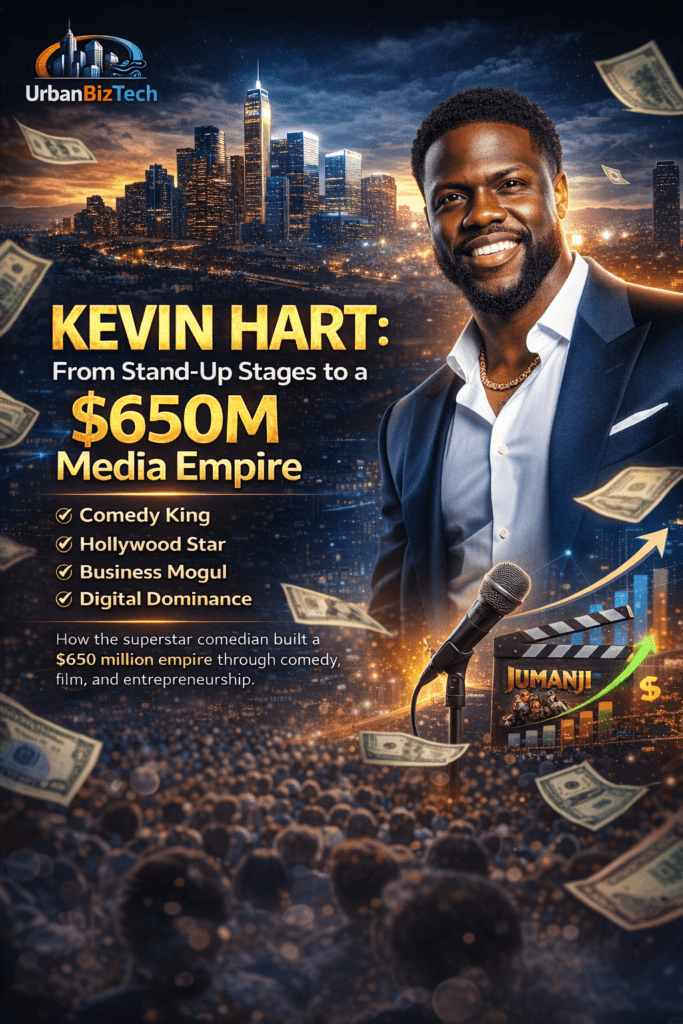
Kevin Hart: From Stand-Up Stages to a $650M Media Empire
1) What is Kevin Hart’s estimated net worth?
Estimates vary by source and year, but most financial publications place Kevin Hart’s net worth in the hundreds of millions of dollars. His wealth is driven by touring, film salaries, production ownership, brand partnerships, and equity stakes.
2) How did Kevin Hart make most of his money?
Hart’s income comes from five primary pillars:
- Global stand-up tours
- Film salaries and backend profit participation
- Ownership in HartBeat
- Strategic brand endorsements
- Investments in fitness, tech, and consumer ventures
Ownership and equity—rather than appearance fees alone—significantly increased his long-term wealth.
3) What is HartBeat and why is it important?
HartBeat is Hart’s integrated media company producing film, TV, digital content, and branded entertainment. After securing major investment in 2022, the company was reportedly valued at approximately $650 million—positioning Hart as a media executive, not just on-screen talent.
4) Which movies significantly boosted his earnings?
Commercially successful projects like Jumanji, Central Intelligence, and Ride Along elevated his market value. Beyond upfront salaries, backend profit participation deals increased total compensation.
5) Does Kevin Hart earn more from comedy or film?
Historically, his arena tours have generated massive gross revenue, sometimes rivaling blockbuster film paydays. However, films and production ownership provide scalable, long-term upside through residuals, licensing, and equity.
6) How important are brand partnerships to his wealth?
Extremely important. Partnerships with companies such as Nike and Hyundai generate multi-million-dollar contracts while strengthening his global brand presence.
7) Does Kevin Hart invest outside entertainment?
Yes. Hart has diversified into:
- Fitness ventures
- Technology startups
- Consumer products
- Real estate holdings
Diversification reduces dependency on entertainment income cycles.
8) How does social media impact his business model?
With over 100 million followers across platforms, Hart owns a direct marketing channel. This allows him to:
- Launch products efficiently
- Promote tours and films
- Secure high-value brand deals
- Maintain global relevance
Audience ownership strengthens negotiating leverage.
9) What makes Kevin Hart different from traditional comedians?
Traditional comedians primarily monetize performances. Hart built an integrated ecosystem—touring, film, digital, production, and equity ownership—mirroring startup founders more than entertainers.
10) What can entrepreneurs learn from Kevin Hart?
Key lessons include:
- Own your production whenever possible
- Diversify revenue streams
- Convert audience attention into equity
- Build a brand that scales beyond one skill
- Surround yourself with financial and strategic advisors
Pingback: How Nike Became the Largest Sportswear Company in the World