
For most of the 20th century, Hollywood was driven by stars, directors, and individual blockbuster films. Franchises existed, but none had truly transformed cinema into a vast interconnected narrative universe.
That changed in 2008.
With the release of Iron Man, a relatively risky superhero film starring Robert Downey Jr., Marvel Studios quietly launched what would become the most successful franchise in the history of cinema: the Marvel Cinematic Universe.
Less than two decades later, the MCU has generated more than $30 billion at the global box office, fundamentally reshaping Hollywood’s business model, storytelling approach, and global audience expectations.
This is the story of how Marvel did it.
From Bankruptcy to Box Office Dominance
In the late 1990s, Marvel was far from the entertainment giant it is today.
The comic book company had filed for bankruptcy and had begun selling film rights to many of its characters just to survive. Characters like:
- Spider-Man
- X-Men
- Fantastic Four
were licensed to other studios.
When Marvel decided to produce its own films, it was a massive gamble.
Instead of starting with its most famous heroes, the studio launched its universe with B-list characters.
The gamble paid off.
Iron Man grossed nearly $600 million worldwide and introduced audiences to a charismatic new hero whose personality helped define the tone of the entire franchise.
More importantly, the film ended with a now-legendary post-credit scene featuring Nick Fury hinting at the Avengers Initiative.
Hollywood had never seen anything quite like it.
The Revolutionary Idea: A Shared Cinematic Universe
The key innovation behind Marvel’s success was simple but groundbreaking.
Every film would be part of a larger story.
Instead of isolated franchises, Marvel built a fully interconnected cinematic universe where characters could cross over between movies, storylines could span years, and events in one film could impact another.
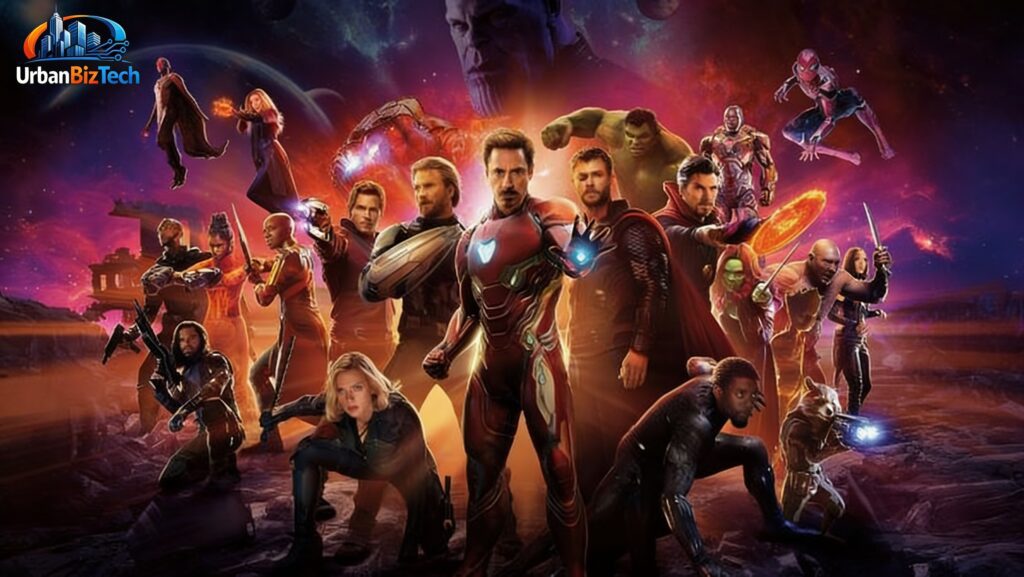
This strategy culminated in The Avengers, which united heroes from several individual films into a single blockbuster event.
The result:
- Massive anticipation
- Record-breaking box office numbers
- A blueprint for the future of blockbuster filmmaking
Suddenly, studios across Hollywood were attempting to replicate the “shared universe” model.
Few succeeded.
Long-Term Planning That Hollywood Had Never Seen
One of Marvel’s greatest strengths has been long-term narrative planning.
Under the leadership of Kevin Feige, the studio mapped its films into carefully structured phases.
Each phase introduces new heroes, expands the universe, and builds toward a massive crossover event.
Major milestones included:
- Avengers: Infinity War
- Avengers: Endgame
When Endgame premiered, it became a cultural event rarely seen in cinema history.
Fans around the world attended midnight screenings, avoided spoilers like national secrets, and celebrated the culmination of more than a decade of storytelling.
The film went on to earn over $2.7 billion globally, briefly becoming the highest-grossing film of all time.
The Disney Effect
In 2009, a major turning point arrived.
The Walt Disney Company acquired Marvel Entertainment for about $4 billion.
At the time, some analysts questioned the price.
Today, it looks like one of the most successful acquisitions in entertainment history.
Disney provided Marvel with:
- unmatched global distribution
- massive marketing power
- theme park integration
- merchandising dominance
- streaming expansion
The MCU became not just a film franchise but a global entertainment ecosystem.
Characters That Became Global Icons
A major factor behind Marvel’s success is its characters.
Over the years, heroes like:
- Iron Man
- Captain America
- Thor
- Black Panther
- Spider-Man
have evolved from comic book characters into worldwide cultural symbols.
Black Panther in particular became a cultural milestone, celebrating African culture while grossing more than $1.3 billion worldwide and earning multiple Academy Award nominations.
Marvel proved superhero films could be both commercially dominant and culturally significant.
Marketing That Turns Movies Into Global Events
Marvel doesn’t just release films.
It launches global events.
Each release is supported by:
- viral trailers
- worldwide press tours
- fan conventions like San Diego Comic-Con
- social media campaigns
- cross-brand partnerships
By the time a Marvel film reaches theaters, anticipation has already reached a global scale.
The studio has mastered the art of turning a movie premiere into a cultural moment.
Expanding Beyond Cinema
Marvel’s strategy has expanded far beyond theatrical films.
With the launch of Disney+, the MCU expanded into television series that connect directly with the films.
Shows like:
- WandaVision
- Loki
introduced new storytelling formats while keeping audiences invested between major movie releases.
This cross-platform storytelling further strengthened fan engagement.
The Numbers Behind Marvel’s Dominance
Few film franchises in history come close to Marvel’s scale.
Approximate global totals:
- Marvel Cinematic Universe — $30B+
- Star Wars — about $10B+
- James Bond — about $7B+
The MCU didn’t just succeed.
It tripled the scale of blockbuster franchising.
Marvel’s Impact on Hollywood
Marvel’s influence on the film industry is enormous.
Studios began launching their own cinematic universes:
- DC Extended Universe
- Universal Monsters Universe
Most struggled to replicate Marvel’s balance of storytelling, planning, and audience trust.
Marvel had changed the rules of blockbuster filmmaking.
The Challenges Ahead
Despite its success, Marvel faces new challenges.
Audience expectations are higher than ever.
Some recent releases have received mixed reactions, and industry observers debate whether superhero fatigue could eventually slow the genre.
At the same time, the MCU continues introducing new heroes, expanding its multiverse storyline, and experimenting with tone and genre.
If history has shown anything, it’s that Marvel is remarkably good at adapting.
A Cultural Empire
What began as a risky experiment with a second-tier superhero has become the most powerful franchise in entertainment history.
The Marvel Cinematic Universe is no longer just a film series.
It is:
- a global fandom
- a storytelling experiment
- a business powerhouse
- and one of the defining cultural phenomena of the 21st century.
And remarkably, the story is still far from over.
FAQ – Marvel Cinematic Universe
What is the Marvel Cinematic Universe (MCU)?
The Marvel Cinematic Universe is a shared universe of superhero films and TV series produced by Marvel Studios where characters and storylines connect across multiple movies and shows.
When did the MCU start?
The MCU officially began with the release of Iron Man in 2008, starring Robert Downey Jr. as Tony Stark.
How much money has Marvel made at the box office?
As of recent estimates, MCU films have generated over $30 billion worldwide, making it the highest-grossing film franchise in history.
What is the highest-grossing Marvel movie?
The biggest MCU film is Avengers: Endgame, which earned more than $2.7 billion globally.
Who runs Marvel Studios?
Kevin Feige is the president of Marvel Studios and the main creative architect behind the MCU.
How many Marvel movies are there?
As of the mid-2020s, there are 30+ films in the MCU, divided into multiple phases known as the Infinity Saga and the Multiverse Saga.
Why are Marvel movies so popular?
Marvel movies succeed because of:
- Interconnected storytelling
- Memorable characters
- Massive global marketing
- High-quality visual effects
- A loyal worldwide fanbase
Is Marvel owned by Disney?
Yes. The Walt Disney Company acquired Marvel Entertainment in 2009 for about $4 billion.
Pingback: Why Boeing and Airbus Dominate the Aviation Industry
Pingback: How Dwayne Johnson Built an $800M Empire | Business Strategy of The Rock
Pingback: Hollywood’s Global Economic Power: How Film Became a $130B Industry