
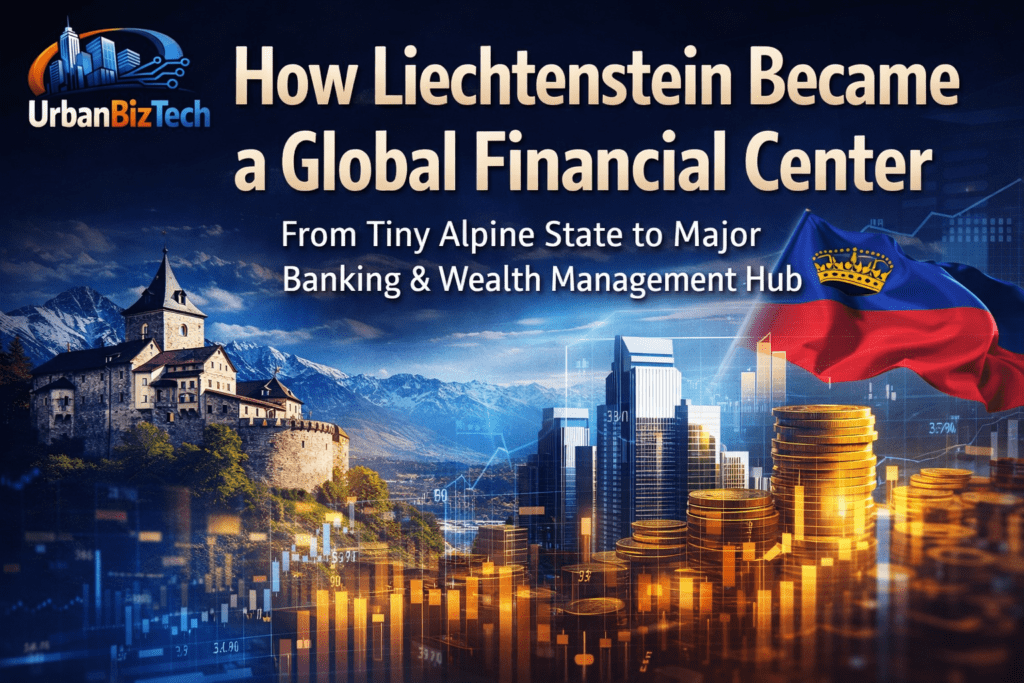
The Strategic Reinvention of One of Europe’s Smallest Economies
Nestled between Switzerland and Austria, Liechtenstein is easy to overlook on a map. Yet in global finance, this Alpine principality commands influence far beyond its size.
With a population of fewer than 40,000 people, Liechtenstein has engineered one of the most sophisticated and internationally integrated financial sectors in Europe. Its transformation from a modest agrarian economy into a specialized wealth management hub reflects not luck, but long-term institutional design, regulatory adaptation, and strategic positioning within Europe’s economic architecture.
From Agrarian Periphery to Financial Platform
Until the mid-20th century, Liechtenstein’s economy relied primarily on agriculture and small-scale manufacturing. Post–World War II industrialization brought diversification, but the true pivot occurred when the country deliberately cultivated cross-border financial services.
Political neutrality, institutional continuity, and legal stability fostered investor confidence. Over time, Liechtenstein developed a reputation for legal structures tailored to international clients—particularly in asset protection, foundations, and fiduciary services.
Rather than compete on size, it competed on specialization.
The EEA Turning Point
A defining milestone came in 1995, when Liechtenstein joined the European Economic Area (EEA). This decision fundamentally altered its financial trajectory.
EEA membership granted:
- Direct access to the EU single market
- Passporting rights for financial services
- Regulatory alignment with EU financial directives
Unlike offshore jurisdictions operating at the margins of global finance, Liechtenstein embedded itself within the European regulatory framework while retaining sovereign tax autonomy.
The result: a hybrid model combining EU market access with microstate agility.
Reinventing Transparency
Liechtenstein’s financial sector once faced international criticism over banking secrecy and tax opacity. However, following the 2008 global financial crisis, the principality undertook significant reforms.
Today, it adheres to OECD transparency standards, automatic exchange of information agreements, and stringent anti–money laundering regulations. The narrative shifted from secrecy to compliance.
This recalibration was strategic. In an era of heightened scrutiny, regulatory credibility became a competitive asset rather than a constraint.
Competitive Advantages in a Crowded Landscape
Liechtenstein’s financial ecosystem now includes:
- Private banks
- Asset management firms
- Insurance providers
- Alternative investment funds
- Fiduciary and foundation specialists
Its strengths lie in:
- Political and monetary stability (Swiss franc currency linkage)
- Highly developed wealth management expertise
- Cross-border service capabilities within the EEA
- A long-term, intergenerational investment philosophy
Unlike global financial giants such as London or New York City, Liechtenstein does not seek scale. It seeks precision.
Financial Innovation and Structural Flexibility
Beyond traditional private banking, Liechtenstein has expanded into:
- Alternative investment structures
- Family office services
- Specialized insurance vehicles
- FinTech frameworks
The country’s regulatory authority, the Financial Market Authority (FMA), operates within EU standards while maintaining responsiveness to innovation. This balance between prudence and adaptability has proven crucial.
Challenges Ahead
Despite its resilience, Liechtenstein faces structural pressures:
- Intensifying regulatory harmonization within Europe
- Competition from Luxembourg and Singapore
- Digital transformation demands
- Geopolitical and cross-border tax policy shifts
Yet its model—small, specialized, compliant—appears structurally durable.
A Microstate with Macro Influence
Liechtenstein’s rise illustrates a broader economic truth: size is not destiny. Institutional quality, regulatory credibility, and strategic integration matter more than geographic scale.
In a financial world shaped by transparency, mobility of capital, and regulatory competition, Liechtenstein has quietly positioned itself not as a tax haven relic—but as a modern European financial node built for long-term stability.
Frequently Asked Questions (FAQ) About Liechtenstein as a Financial Center
1. Why is Liechtenstein considered a financial center?
Liechtenstein is considered a financial center because of its strong banking sector, advanced wealth management services, stable political system, and access to the European single market through the European Economic Area (EEA).
Despite its small size, the country has developed a highly specialized financial ecosystem serving international clients.
2. Is Liechtenstein part of the European Union?
No, Liechtenstein is not a member of the European Union. However, it is part of the European Economic Area (EEA), which allows it to participate in the EU single market and offer cross-border financial services under EU-aligned regulations.
3. What currency does Liechtenstein use?
Liechtenstein uses the Swiss franc (CHF) as its official currency through a monetary agreement with Switzerland.
This provides strong monetary stability and reinforces investor confidence.
4. Is Liechtenstein a tax haven?
Liechtenstein was historically associated with banking secrecy. However, in recent years it has implemented international transparency standards, automatic exchange of information agreements, and anti–money laundering regulations.
Today, it operates as a compliant and regulated financial center rather than a traditional tax haven.
5. What financial services is Liechtenstein known for?
Liechtenstein is particularly known for:
- Private banking
- Wealth and asset management
- Investment funds
- Foundations and fiduciary services
- Insurance and specialized financial structures
Its expertise in long-term wealth structuring makes it attractive to high-net-worth individuals and family offices.
6. How did EEA membership benefit Liechtenstein’s financial sector?
Joining the EEA in 1995 allowed Liechtenstein to:
- Access the EU single market
- Provide financial services across EU countries
- Align with EU financial regulations
This significantly strengthened its credibility and competitiveness within Europe.
7. How big is Liechtenstein’s financial sector compared to its size?
Although Liechtenstein has a population of under 40,000 people, its financial sector manages billions in assets and plays a disproportionately large role in European wealth management.
The financial industry is one of the key pillars of its national economy.
8. Why do investors choose Liechtenstein over other financial centers?
Investors choose Liechtenstein because of:
- Political and legal stability
- Swiss franc currency stability
- Strong regulatory framework
- Flexible foundation and trust structures
- Access to European markets
It combines the advantages of a small, agile jurisdiction with EU regulatory alignment.
9. Who regulates financial institutions in Liechtenstein?
Financial institutions are supervised by the Financial Market Authority (FMA) Liechtenstein, which ensures compliance with EU directives, investor protection, and anti–money laundering standards.
10. What challenges does Liechtenstein’s financial sector face?
Key challenges include:
- Increasing EU regulatory harmonization
- Global tax transparency initiatives
- Competition from larger financial hubs
- Digital transformation pressures
However, its small size allows for faster regulatory adaptation and strategic flexibility
Pingback: How Switzerland Became the World’s Largest Wealth Management Hub
Pingback: Top Private Banks for Wealth Management and Family Offices: Best Private Banks for Wealth Management and Family Offices (2026 Guide)