
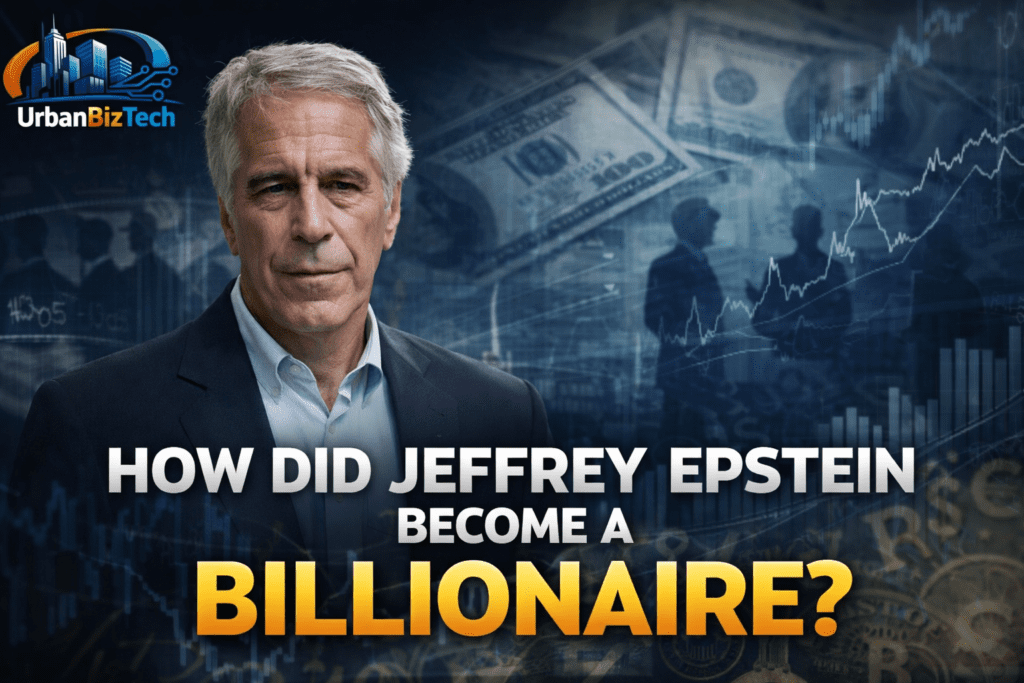
The Controversial Rise of One of the Most Mysterious Fortunes in Modern Finance
A Fortune Larger Than Its Explanation
Few figures in contemporary financial history have generated as much fascination and suspicion as Jeffrey Epstein.
Unlike the archetypal billionaire founder who builds a technology empire or industrial powerhouse, Epstein appeared to emerge almost suddenly among the ultra-wealthy—armed with elite connections, extraordinary access, and a fortune whose origins were never fully transparent.
Even years after his downfall, investigators, journalists, and the public continue to debate the same central question:
How did he actually make his money?
Early Years: From Classroom to Wall Street
Epstein’s professional path did not begin in investment banking or private equity.
In the 1970s, he worked as a teacher at the prestigious Dalton School in New York, where he became acquainted with students from influential and affluent families.
Those relationships proved pivotal. Through a parent connection, Epstein secured a position at Bear Stearns, launching a rapid transition from education into high finance.
The Wall Street Phase: Skill, Access, and Reputation
At Bear Stearns, Epstein reportedly worked in roles connected to complex financial products and wealthy clients. Accounts from former colleagues often describe him as confident, mathematically sharp, and unusually comfortable operating in elite circles.
Yet documentation of his precise achievements, compensation, or client impact remains limited—one of many gaps that would later fuel questions about his wealth.
He left the bank in the early 1980s under circumstances that have been described differently by various sources.
Building a Private Financial Empire
After departing Wall Street, Epstein founded J. Epstein & Co., a firm that he claimed would only serve billionaires.
That exclusivity created mystique.
In finance, scarcity can function as marketing power.
But outsiders rarely saw detailed evidence of how the firm operated, how assets were structured, or how performance was measured.
The Network: His Most Valuable Asset
More than any identifiable investment strategy, Epstein’s influence appeared rooted in relationships.
Over time, he cultivated connections with political leaders, academics, business executives, and public figures across multiple countries. Access to powerful networks often translated into credibility, and credibility in turn opened doors to new introductions.
Whether these relationships generated enormous management fees, partnership stakes, or other financial arrangements remains a matter of ongoing reporting and debate.
Where Did the Wealth Come From?
Several explanations are frequently cited by journalists and investigators:
Fees from Managing Fortunes
Epstein was believed to charge unusually high compensation in exchange for discretion and specialized financial structuring.
Financial Ties to Leslie Wexner
His relationship with the retail magnate became one of the most scrutinized aspects of his career.
Wexner granted Epstein significant authority over parts of his financial affairs, a move that later drew intense attention.
Real Estate Holdings
Epstein controlled extraordinary properties, including a vast Manhattan townhouse and private islands, assets that both symbolized and reinforced his elite status.
Private Arrangements
Some reports have suggested he may have participated in deals or partnerships that were never publicly disclosed.
None of these explanations, individually or collectively, has fully satisfied critics seeking a simple, verifiable answer.
Why the Mystery Persisted
Unlike leaders of public corporations, Epstein operated within private structures that required little disclosure.
Clients valued confidentiality. Transactions were opaque. Paper trails were limited.
This environment allowed estimates of his net worth to circulate widely while hard verification remained elusive.
Legal Collapse and Historical Reassessment
Any discussion of Epstein’s finances is inseparable from the criminal investigations that ultimately redefined his legacy.
His arrest in 2019 on federal charges involving sex trafficking of minors triggered global scrutiny not only of his conduct but also of the ecosystem of power surrounding him.
His death in custody intensified public suspicion and ensured that many questions about his finances would likely remain unresolved.
Today, journalists tend to frame his fortune not as a model of financial genius, but as one of the most puzzling accumulations of wealth in modern history.
Power, Access, and the Limits of Transparency
Jeffrey Epstein did not become famous for inventing a product or founding a global corporation.
His prominence stemmed from proximity—to money, to influence, and to people accustomed to privacy.
Whether he was primarily an investment adviser, a gatekeeper, a facilitator, or something harder to define is still debated.
What is certain is this:
his wealth story illustrates how, at the highest levels of finance, relationships can be as valuable as capital—and far harder to trace.
FAQ
Who was Jeffrey Epstein?
Jeffrey Epstein was an American financier who became widely known for his relationships with influential figures in politics, business, and academia. His reputation later collapsed following criminal investigations into sex trafficking of minors.
How did Jeffrey Epstein make his money?
There is no single, fully documented explanation.
Reports typically point to wealth-management services for ultra-rich clients, unusually high fees, and financial authority granted to him by prominent individuals. However, many aspects of his fortune remain unclear due to the private nature of his operations.
Did Epstein run a hedge fund?
He presented himself as a money manager for billionaires through his firm, J. Epstein & Co. Unlike traditional hedge funds, the company disclosed very little publicly, which contributed to ongoing speculation about its scale and performance.
What was his connection to Leslie Wexner?
Wexner, the founder of L Brands, entrusted Epstein with significant financial responsibility for a period of time. This relationship later became a central focus of media and legal scrutiny.
Was Jeffrey Epstein officially considered a billionaire?
Estimates of his net worth varied widely. Because his businesses were private and documentation was limited, no definitive public figure was ever confirmed.
Why is his wealth still debated today?
Epstein operated in environments that prioritized confidentiality. Without transparent filings or audited disclosures, journalists and investigators have found it difficult to determine precisely how his assets were accumulated.
What happened to him in 2019?
Epstein was arrested on federal charges related to sex trafficking of minors. He later died while in custody, an event that intensified global attention and fueled further questions about his network and finances.
Did investigations fully uncover his financial network?
Authorities uncovered parts of it, but many observers believe the complete picture of his partnerships, clients, and financial arrangements may never be known.
Pingback: How the United States Became the World’s Largest Economy — and Why It’s So Hard to Overtake - Urban Business Technology