
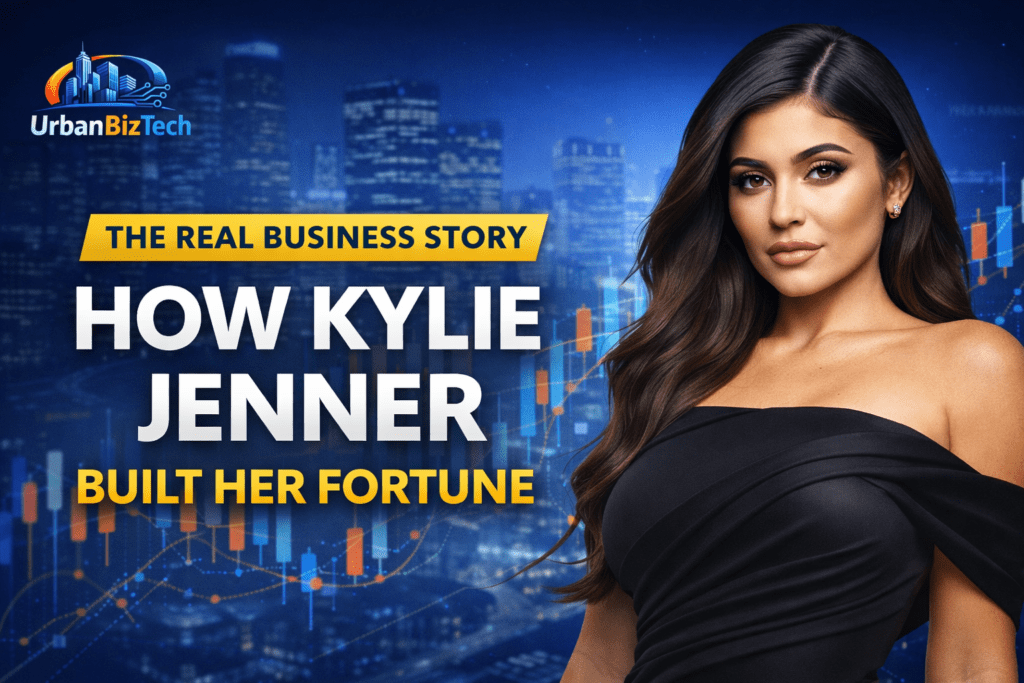
When people hear the name Kylie Jenner, they think of beauty, influence, and extraordinary wealth.
In less than a decade, she transformed from a teenager on reality television into one of the most financially successful entrepreneurs of her generation.
But the key question remains:
How did Kylie Jenner build her fortune?
Was it family fame, marketing genius, perfect timing — or a combination of all three?
This deep dive breaks down the strategy, numbers, controversies, and lessons behind the rise of her empire.
From Reality TV to Global Attention
Kylie’s first exposure to mass audiences came through Keeping Up with the Kardashians.
The show didn’t just make her famous — it normalized constant visibility.
By the time she entered her late teens, she already had:
- A global fan base
- Built-in media coverage
- Direct access to millions of consumers
- A last name that functioned as a marketing engine
However, visibility alone doesn’t create billion-dollar outcomes. Monetization does.
The Social Media Advantage: Turning Attention into Revenue
Long before many traditional brands understood influencer economics, Kylie realized something critical:
👉 distribution is more powerful than advertising.
Her Instagram account became a retail channel.
Every post could trigger immediate demand, bypassing traditional marketing funnels.
Instead of paying to reach customers, she owned the audience.
This dramatically reduced customer acquisition costs and increased margins.
The Launch of Kylie Cosmetics
In 2015, Kylie introduced her first product line: Lip Kits.
They sold out almost instantly.
Why did the launch explode?
1. Product-market fit
Consumers wanted the “Kylie lip look.”
2. Scarcity marketing
Limited drops created urgency.
3. Direct communication
She personally promoted releases to millions in real time.
4. Lean operations
Outsourced manufacturing, small internal teams, low overhead.
The result?
Huge profitability relative to company size.
Scaling Beyond Lip Kits
After proving demand, the company expanded into:
- Eye palettes
- Face products
- Skincare
- Seasonal collaborations
Each launch followed the same playbook: hype → drop → sell-out → waitlist → repeat.
This system turned product releases into cultural events rather than routine retail moments.
The $600 Million Deal
In 2019, Kylie sold 51% of her company to Coty for $600 million.
The deal implied a valuation near $1.2 billion and pushed headlines worldwide.
Why sell?
Because global scaling requires:
- International distribution
- Retail partnerships
- supply-chain muscle
- regulatory infrastructure
A strategic buyer could accelerate growth faster than staying independent.
The Billionaire Label — and the Debate
Following the acquisition, Forbes declared Kylie the youngest self-made billionaire at the time.
The announcement sparked immediate backlash.
Critics argued:
- She came from wealth and connections
- Media exposure gave her unfair leverage
- The term “self-made” ignored structural advantages
Later, valuation transparency became a topic of dispute.
Regardless of definitions, one fact remained undeniable:
👉 she converted influence into an enormous business outcome.
Additional Income Streams
While cosmetics drove the valuation, her wealth also benefited from:
- Paid promotions (often priced in the high six or seven figures per post)
- Television income
- Licensing deals
- Real-estate investments
- Brand extensions like skincare and baby products
Diversification reduced reliance on a single revenue source.
A Repeatable Celebrity Blueprint?
Kylie is not the only celebrity to turn fame into equity.
Consider:
- Rihanna with Fenty Beauty
- Jessica Alba with The Honest Company
The pattern is clear:
audience → brand → ownership → scale → liquidity event.
What made Kylie different was speed and digital efficiency.
The Core Strategy Behind Kylie Jenner’s Net Worth
At its heart, her success relied on five pillars:
- Massive personal brand equity
- Direct-to-consumer reach
- Viral product positioning
- Limited-supply psychology
- Strategic partnership for global growth
Remove any one of these, and the outcome changes.
What Entrepreneurs Can Learn
Whether you are a startup founder, creator, or small business owner, the lessons are powerful:
- Build attention before products
- Own your distribution
- Launch small, test fast
- Turn personality into IP
- Think exit from day one
You may not replicate the scale, but the mechanics are transferable.
Final Thoughts
Kylie Jenner’s rise represents a shift in modern capitalism.
Influence, when paired with ownership, can rival traditional corporate pathways.
The smartphone became the storefront.
Followers became customers.
Identity became enterprise value.
Love the narrative or question it — her model changed how celebrity business is built.
FAQ – Kylie Jenner’s Wealth & Business Model
How did Kylie Jenner make her money?
Kylie Jenner built her fortune primarily through her cosmetics company, Kylie Cosmetics. She leveraged her massive social media following to market products directly to consumers, enabling rapid sellouts and high profit margins. Additional income comes from endorsements, television, licensing deals, and investments.
Is Kylie Jenner really self-made?
The label became popular after Forbes named her the youngest self-made billionaire in 2019. Critics argue she benefited from fame, media exposure, and family wealth, while supporters say she independently built and owned a fast-growing company. The definition of “self-made” remains debated.
How much did Kylie Jenner sell Kylie Cosmetics for?
In 2019, she sold 51% of Kylie Cosmetics to Coty for $600 million, valuing the business at roughly $1.2 billion at the time.
Why was Kylie Cosmetics so successful?
The brand succeeded because of strong product demand, scarcity-based launches, direct promotion through social media, and lean operations. Kylie’s personal brand made marketing extremely efficient compared to traditional beauty companies.
What is Kylie Jenner’s net worth?
Estimates vary depending on company performance, market conditions, and private financial details. Financial publications, including Forbes, have revised figures multiple times over the years.
Does Kylie Jenner still own her company?
Yes. After selling a majority stake, she remained a significant shareholder and continued to play a central role in branding, marketing, and product direction.
How much can Kylie Jenner earn from one Instagram post?
Industry estimates suggest she can command fees in the high six or even seven figures per sponsored post, depending on the campaign and partner.
What businesses does Kylie Jenner own besides cosmetics?
Beyond makeup, she has expanded into skincare, baby products, collaborations, licensing, and real estate investments, creating multiple income streams outside her original brand.
Pingback: How the Kardashians-Jenner Built a Billion-Dollar Empire: Secrets of Their Global Success
Pingback: Ariana Grande Net Worth 2026: How She Built a $250M Empire