
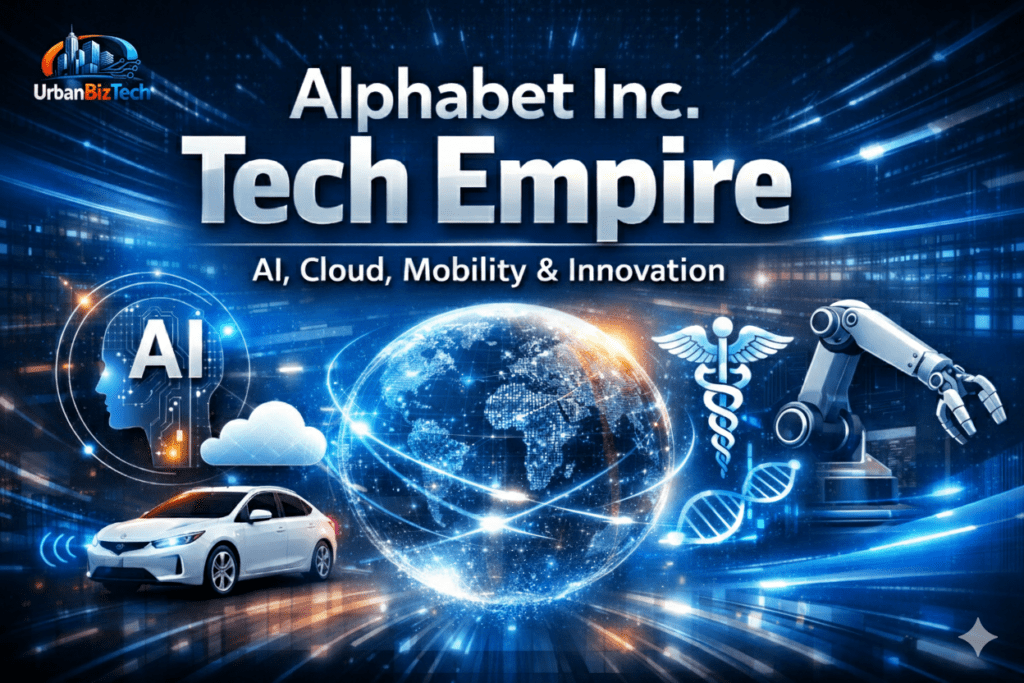
In 2015, Google shocked the world by restructuring under a new parent company, Alphabet Inc. At first glance, it seemed like a corporate reshuffle — a renaming exercise to appease investors and simplify management. But in hindsight, this move was a strategic masterstroke that transformed Google into a diversified global powerhouse.
Today, Alphabet isn’t just the company behind Google. It’s a sprawling ecosystem of ventures spanning artificial intelligence, cloud computing, autonomous transportation, healthcare, robotics, and more. Alphabet represents the blueprint of a modern multi-industry technology conglomerate, shaping the future of the digital economy.
This article explores how Alphabet evolved into a multi-armed empire, why it matters for everyday users and investors, and what challenges and opportunities lie ahead.
Why Google Became Alphabet
Before 2015, Google was already massive — the world’s top search engine, owner of YouTube, and the developer of Android. But its growth also created a challenge: how to balance innovation and bureaucracy.
1. Separating Innovation from Operations
Google’s sprawling structure slowed decision-making for experimental projects. By forming Alphabet, the company could create independent subsidiaries, allowing each venture to innovate without being constrained by Google’s core operations.
2. Encouraging Risk-Taking
Projects like Waymo (autonomous vehicles), Verily (health sciences), and DeepMind (advanced AI research) required enormous funding and creative freedom. Alphabet’s model provides both — enabling moonshot projects to thrive without jeopardizing the company’s main revenue streams.
3. Transparency for Investors
Investors benefit from Alphabet’s structure. Core Google services — Search, YouTube, Ads, Android — are now separated from experimental bets, giving shareholders a clearer picture of financial performance across divisions.
Alphabet Today: A Multi-Industry Powerhouse
Alphabet’s empire spans far beyond search and ads. Let’s examine its key divisions:
1. Google: The Core Engine
Google remains the heart of Alphabet. Its products dominate multiple markets:
- Search: Over 90% of global queries go through Google.
- YouTube: The world’s largest video platform.
- Android: Dominates more than 70% of smartphones globally.
- Google Cloud: Growing rapidly, with multi-billion-dollar annual revenue.
- Gmail, Maps, Chrome, Workspace: Essential tools for businesses and individuals.
The scale of these services alone ensures Alphabet’s dominance in digital infrastructure.
2. Waymo: The Future of Transportation
Waymo is Alphabet’s autonomous vehicle division. With billions invested in self-driving technology, Waymo is at the forefront of safe, autonomous transportation, and could redefine urban mobility in the next decade.
3. DeepMind: Advancing Artificial Intelligence
DeepMind is one of the most advanced AI research labs in the world. Key achievements include:
- AlphaGo: First AI to beat a world champion in Go.
- AlphaFold: Revolutionizing protein structure prediction.
- Cutting-edge AI models applied in healthcare, energy, and research.
4. Verily and Calico: Healthcare & Longevity
- Verily: Focuses on digital health tools, data-driven diagnostics, and medical devices.
- Calico: Researches aging and longevity, aiming to extend human life span through cutting-edge biotechnology.
5. X (Moonshot Factory): Experimental Ventures
X is Alphabet’s playground for high-risk, high-reward projects:
- Project Loon (internet balloons)
- Delivery drones and robotics
- Renewable energy innovations
- Experimental transportation systems
Alphabet’s Strategy to Shape the Future
Alphabet doesn’t simply maintain its current empire; it actively invests in the technologies of tomorrow.
1. Artificial Intelligence
AI is the engine of Alphabet’s growth:
- Integrating AI into every Google product
- Expanding DeepMind’s research capabilities
- Developing advanced language models for enterprise and consumer applications
2. Internet Infrastructure
Through Google Cloud, massive data centers, undersea cables, Android, and Chrome OS, Alphabet is not just a user of the internet — it’s part of its backbone.
3. Diversified Revenue Streams
Alphabet no longer relies solely on advertising:
- Cloud computing revenue
- Subscription services (YouTube Premium, Google One)
- Devices (Pixel phones, Nest)
- Autonomous vehicle technology
- AI-driven services
This diversification strengthens Alphabet’s resilience against market fluctuations.
How Alphabet Dominates the Digital Economy
1. Data as the New Oil
Alphabet controls one of the largest datasets in the world, powering:
- Targeted advertising
- AI model training
- Behavioral analytics
- Product development
2. Advertising Revenue
Google Ads and YouTube Ads form the largest global ad network, generating tens of billions annually.
3. Content & Media
YouTube alone generates massive revenue through ads and subscriptions, and continues to dominate online video engagement worldwide.
4. Mobile Ecosystem
Android’s global penetration ensures Alphabet maintains influence over both software and hardware ecosystems, making it a key player in the mobile market.
Challenges Facing Alphabet
Despite its dominance, Alphabet confronts major risks:
1. Regulatory Scrutiny
- Antitrust investigations in the U.S. and EU
- Oversight on search engine dominance, advertising, and Android
2. Competition in AI
Rivals like OpenAI, Meta, and Amazon are pushing aggressively in AI, cloud, and enterprise solutions.
3. Advertising Dependence
Even with diversification, advertising still constitutes a significant portion of total revenue.
Future Outlook
Alphabet shows no signs of slowing down. Expected growth areas include:
- Generative AI and enterprise AI solutions
- Autonomous vehicles
- Digital healthcare and longevity
- Robotics and automation
- Renewable energy and quantum computing
Alphabet is positioning itself as a company that builds the future, not just a tech giant.
FAQ — Key Questions About Alphabet
Q: Is Alphabet just a search engine company?
A: No. While Google Search remains critical, Alphabet has diversified into AI, cloud, autonomous vehicles, and healthcare.
Q: How does Alphabet make money beyond ads?
A: Revenue comes from Google Cloud, YouTube subscriptions, hardware sales, AI services, and other ventures.
Q: Who leads Alphabet’s strategic vision?
A: CEO Sundar Pichai oversees Google and Alphabet operations, while divisions like DeepMind and Waymo have specialized leadership teams.
Q: What risks should investors or tech watchers consider?
A: Regulatory scrutiny, high competition in AI, and reliance on advertising revenue are key considerations.
Q: Why is Alphabet important for the future of technology?
A: Its investments in AI, cloud, autonomous transport, and healthcare position it to shape multiple critical industries over the next decades.
Alphabet has evolved from a search engine into a multi-industry technology conglomerate, shaping the digital economy across AI, cloud computing, transportation, and healthcare. Its strategy of innovation, diversification, and data-driven growth makes it a dominant player with a long-term vision.
For readers and tech enthusiasts, Alphabet represents a case study in modern technological empire-building — an organization that balances risk, innovation, and scale while redefining multiple industries globally.
Pingback: Gemini vs DeepSeek: Ultimate AI Model Showdown for Content, SEO & Development (2026)
Pingback: ChatGPT vs Gemini vs Grok vs Perplexity vs Claude in 2026: Which AI Model Is Best for You? - Urban Business Technology
Pingback: ChatGPT or Gemini? The Truth About Which AI Wins in 2026
Pingback: Why Global Giants Are Racing to Dominate Artificial Intelligence in 2026
Pingback: How Apple Became an Economic Superpower Worth More Than Many Countries
Pingback: How NVIDIA Overtook Apple and Microsoft to Rule the AI Era
Pingback: How Anthropic Became a Global AI Powerhouse: Strategy, Claude 3, Funding & the Race to Safe AGI
Pingback: Perplexity AI vs Google: How AI-Powered Search Is Disrupting the Future of Search Engines
Pingback: Shaquille O’Neal Net Worth: How the NBA Legend Built a $500 Million Empire
Pingback: Inside the Global AI Race: The Battle for Power, Profit, and the Future of Humanity
Pingback: Why Ireland Became a Global Hub for Multinational Corporations (2026 Analysis)