
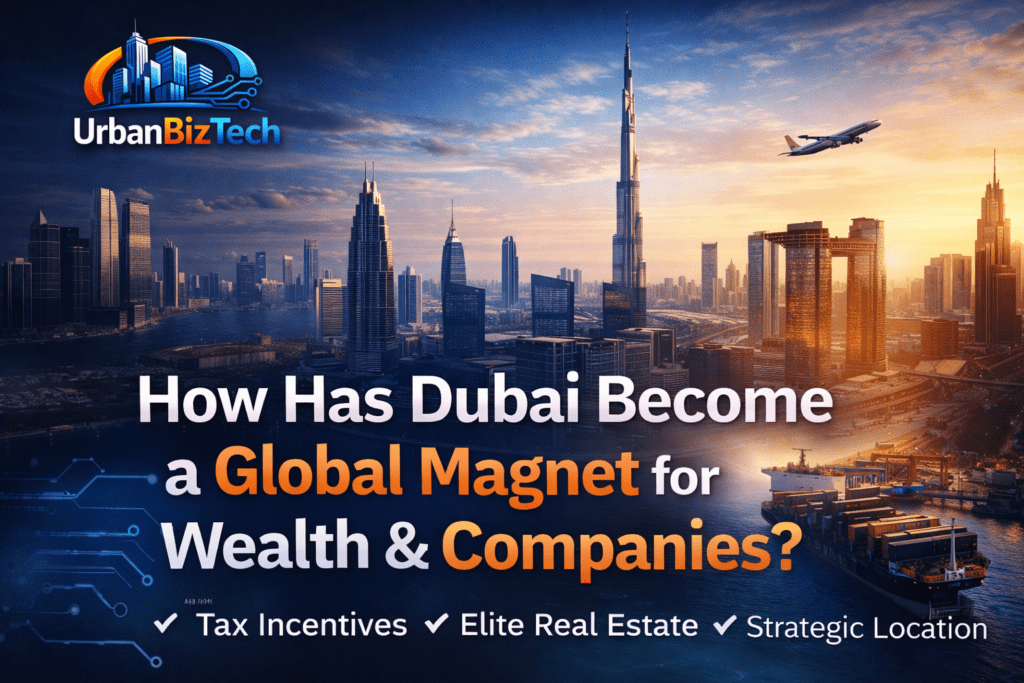
A Rare Economic Experiment in the 21st Century
In a world where cities compete aggressively to attract millionaires and multinational corporations, Dubai has achieved something close to an economic miracle. In just one generation, the emirate evolved from a regional trading hub into one of the most powerful destinations for private capital, global entrepreneurs, and financial institutions.
This transformation was not built on oil wealth alone. It is the result of long-term strategic design: a competitive tax environment, open regulatory frameworks, world-class infrastructure, and political leadership that places international competitiveness at the center of policymaking.
For investors, the question is no longer whether Dubai matters.
The real question is: how did it become such a dominant center for global wealth so quickly?
A Tax Environment That Redirects Global Capital
At a time when many traditional capitals have increased taxes on individuals and corporations, Dubai offered the opposite: capital preservation instead of capital erosion.
The absence of personal income tax has become a major draw for founders, fund managers, and high-net-worth individuals. Even with the introduction of relatively moderate corporate taxation, the emirate remains more competitive than established financial centers such as London or New York City.
For the wealthy, this difference is not marginal — it can translate into millions of dollars per year available for reinvestment.
Full Foreign Ownership: A Powerful Signal to Investors
Allowing expatriates to own 100% of their businesses across many sectors removed a historical barrier that once limited expansion.
The reform effectively turned Dubai from a regional office location into a serious candidate for global headquarters.
Who Is Moving to Dubai? Mapping the New Geography of Wealth
The emirate has been attracting strong inflows of:
- European entrepreneurs seeking tax efficiency
- Asian investors looking for global market access
- Capital from the Middle East and Africa searching for stability
Together, these groups have built one of the most internationally connected financial communities anywhere.
Real Estate: The Preferred Store of Value
Luxury property has become a primary channel for wealth allocation.
Investors are attracted by:
- Competitive rental yields
- Transparent regulations
- Strong demand from new residents
For many global buyers, Dubai increasingly serves as a practical alternative to Singapore.
Infrastructure: When Geography Becomes Strategy
Aviation
Dubai International Airport ranks among the busiest international airports in the world, giving executives rapid access to Europe, Asia, and Africa.
Trade & Logistics
Port of Jebel Ali plays a central role in global supply chains, making the emirate a natural base for logistics and distribution operations.
Free Zones: An Economy Within the Economy
Through specialized hubs such as Dubai International Financial Centre, companies benefit from:
- Independent legal frameworks
- Dedicated commercial courts
- Ease of capital movement
The structure mirrors leading Western jurisdictions while offering greater flexibility.
Beyond Oil: Betting on Technology and Innovation
Dubai is investing heavily in:
- Artificial intelligence
- FinTech
- Digital infrastructure
- Government innovation
The objective is clear: ensure that capital inflows remain sustainable for decades.
Quality of Life: The Underrated Variable
Security, international education, advanced healthcare, and a global lifestyle all help transform relocation decisions from temporary moves into permanent ones.
When families relocate, wealth follows.
Why Is Momentum Accelerating Now?
Geopolitical uncertainty, higher taxation in Western economies, and the normalization of remote work have accelerated the redistribution of global capital — and Dubai was ready to receive it.
Can the Boom Continue?
The key issue is not whether Dubai will remain relevant, but whether it can maintain its competitive edge as more cities attempt to replicate its model.
So far, the long-term strategy appears to be holding.
Dubai became a central node in the global wealth network because it understood early what modern investors value most: speed, security, tax efficiency, and lifestyle.
That formula has already reshaped capital flows — and may define the next era of global economic geography.
FAQ – Why is Dubai attracting global wealth and businesses?
Why are so many millionaires moving to Dubai?
High-net-worth individuals are drawn by the absence of personal income tax, political stability, strong safety levels, premium real estate opportunities, and easy access to global markets across Europe, Asia, and Africa.
Do foreigners get 100% ownership of companies in Dubai?
Yes. In many sectors and across most free zones, foreign investors can fully own their businesses, repatriate profits, and operate under internationally familiar legal structures.
Is Dubai a tax haven?
Dubai is better described as a low-tax, business-friendly jurisdiction rather than a traditional offshore haven. While corporate tax has been introduced, it remains competitive compared with major Western financial centers.
How does Dubai compare with other global hubs?
Compared with cities like London or New York City, Dubai often offers lower taxation, faster company setup, newer infrastructure, and attractive lifestyle benefits.
Why is Dubai’s real estate market popular with investors?
Buyers value relatively high rental yields, modern developments, strong demand from expatriates, and transparent property regulations.
What industries are growing fastest in Dubai?
Key high-growth sectors include financial services, tourism, aviation, logistics, technology startups, and FinTech, alongside continued strength in trade and real estate.
Is Dubai safe for families and wealth relocation?
Yes. Dubai consistently ranks among the safest global cities, with modern healthcare, international schools, and residential communities designed for expatriate living.
Why is Dubai strategically located for global business?
Its geographic position allows companies to serve markets across Europe, Asia, and Africa within manageable flight times, supported by major air and sea transport infrastructure.
Are startups welcomed in Dubai?
Very much so. Government initiatives, accelerators, and funding programs actively encourage entrepreneurship and innovation, particularly in digital and technology sectors.
Will Dubai continue attracting global capital?
Current migration patterns, regulatory reforms, and infrastructure investments suggest the emirate is likely to remain a major destination for investors in the coming years.
Pingback: Why Billionaires Choose New York: The Real Reasons the Ultra-Wealthy Stay
Pingback: Monaco vs Dubai in 2026: Taxes, Wealth, Lifestyle & Where the Rich Are Moving
Pingback: From Oil Wealth to Global Powerhouse: How the UAE Built a Diversified Economy
Pingback: Abu Dhabi’s Financial Rise: How ADGM and Sovereign Wealth Are Reshaping Global Finance
Pingback: Inside London: The Rise of a Global Financial Capital
Pingback: Dubai vs Abu Dhabi: The Battle for the Middle East’s Financial Capital