
The Man Who Owns Luxury
In the global hierarchy of wealth, few figures command as much fascination as Bernard Arnault.
Not because he founded a social network, launched rockets, or built electric cars.
Arnault mastered something far older and arguably more powerful:
desire.
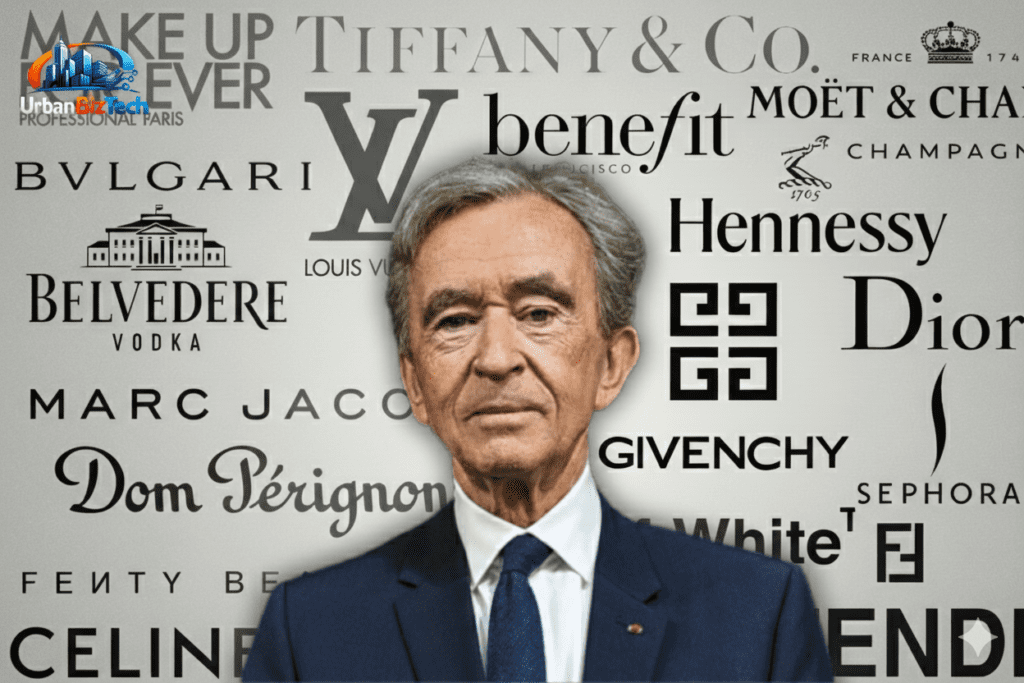
As the Chairman and CEO of LVMH Moët Hennessy Louis Vuitton, he presides over the largest luxury group the world has ever seen — a constellation of more than seventy-five elite brands spanning fashion, leather goods, jewelry, watches, perfumes, cosmetics, wine, spirits, and even hospitality.
Under his leadership, LVMH became not merely a company but a system of cultural influence. When its houses move, trends shift. When it buys, markets react. When it appoints designers, global headlines follow.
For years, Arnault has alternated positions with Elon Musk and Jeff Bezos at the very top of the billionaire rankings. Yet unlike technology moguls, his fortune rests on something intangible: heritage, storytelling, craftsmanship, and controlled scarcity.
How did a man from a construction family in northern France build such dominance?
The answer lies in strategy, patience, and an almost surgical understanding of brand value.
Early Years – Engineering a Business Mind
Bernard Jean Étienne Arnault was born in 1949 in Roubaix, an industrial town near the Belgian border. His father owned Ferret-Savinel, a successful civil engineering company.
Arnault followed a path typical of France’s elite business leaders by graduating from École Polytechnique, one of the most prestigious schools in the country.
When he joined the family company, he quickly revealed a defining trait:
he was not sentimental about existing structures.
He persuaded his father to reduce the firm’s focus on construction and pivot toward real estate development. The move generated capital and demonstrated Arnault’s instinct for reallocation of resources toward higher-value opportunities.
This mindset — identify undervalued assets, reposition them, and scale — would later fuel the rise of LVMH.
1984 – The Dior Gamble That Changed Everything
If one moment marks the birth of Arnault’s empire, it is the acquisition of Boussac Saint-Frères.
The near-bankrupt conglomerate owned factories, textiles, and one extraordinary jewel: Christian Dior.
While other investors saw industrial baggage, Arnault saw global prestige.
After securing financing, he stripped away the unwanted operations and kept Dior, turning it into the foundation of his luxury strategy. The turnaround proved spectacular.
Dior was not simply revived; it was elevated.
This episode cemented Arnault’s reputation as a ruthless but brilliant dealmaker and earned him the nickname:
“The Wolf in Cashmere.”
Taking Control of LVMH
Around the same time, a merger had created a new entity: Louis Vuitton + Moët Hennessy.
Internal tensions among shareholders opened a door.
Arnault moved methodically, buying stakes, forming alliances, and navigating boardroom battles until he gained control in 1989.
From then on, the blueprint was unmistakable:
assemble the greatest collection of luxury brands in history.
Building the Conglomerate Model
Before Arnault, many fashion houses operated independently, often fragile and undercapitalized.
He introduced a new structure:
- Centralized financial power
- Shared expertise in retail and logistics
- Protection of each brand’s identity
- Aggressive global expansion
This allowed creative teams to focus on product while the group optimized growth.
It was private equity thinking applied to glamour.
The Core Philosophy – Where Value Truly Lives
Arnault believes luxury is built on several non-negotiable pillars.
Heritage
History cannot be manufactured overnight. A century of craftsmanship creates authenticity competitors cannot copy.
Scarcity
Availability must be controlled. Excess destroys dream value.
Quality
High prices demand impeccable execution.
Visibility
Luxury must remain culturally present — through fashion shows, celebrities, art foundations, and architecture.
Together, these elements transform objects into symbols.
Why Acquisition Beats Creation
Many entrepreneurs dream of launching new brands.
Arnault prefers buying houses that already possess mythology.
Why?
Because reputation is the hardest asset to build. By acquiring it, LVMH saves decades of uncertainty and can immediately amplify distribution.
It is faster, safer, and often more profitable.
The Crown Jewel – Louis Vuitton
At the financial heart of the empire lies Louis Vuitton, arguably the most powerful luxury label in existence.
Its strengths include:
- extraordinary brand recognition
- tight control over supply
- refusal to discount
- massive margins
- broad international appeal
The cash flow generated by Vuitton finances experimentation elsewhere in the group.
Think of it as the economic engine behind artistic expansion.
Fashion and Leather Goods – The Profit Machine
This division, which includes Dior, Fendi, Celine, Loewe, and others, produces the majority of operating profit.
LVMH perfected the formula of:
creative director hype → runway storytelling → celebrity exposure → waiting lists → premium pricing.
Few industries replicate this cycle as effectively.
Jewelry and Watches – Expanding Permanence
Luxury is not only seasonal; it is also timeless.
Acquisitions such as Bulgari and later Tiffany & Co. allowed LVMH to dominate high-end jewelry, a category with enduring value and strong margins.
The Tiffany deal in 2021, valued at $15.8 billion, marked the largest acquisition ever in the sector and demonstrated Arnault’s willingness to bet big on global icons.
Sephora – Accessing a Wider Audience
While haute couture captures headlines, retail chains like Sephora provide scale and recurring revenue.
Through beauty, LVMH connects with younger consumers who may later graduate to higher-priced goods.
It is a pipeline strategy.
The Asian Growth Engine
No analysis of Arnault’s success is complete without Asia.
Rising middle classes, strong appetite for status symbols, and urban expansion turned the region into a primary driver of growth.
LVMH invested heavily in local presence, tailoring marketing while preserving brand DNA.
Managing Creativity Without Killing It
A paradox defines luxury groups: structure can suffocate art.
Arnault’s solution is delicate balance.
Designers receive resources and global platforms but are expected to respect heritage and deliver commercially viable collections.
Freedom exists — within boundaries.
Leadership Style – Detail Above All
Former executives often describe Arnault as intensely precise.
He reviews store placements, advertising images, even window displays. Nothing escapes attention.
In luxury, microscopic details influence macroscopic perception.
Family Succession – Securing the Future
Arnault has integrated all five of his children into important roles across LVMH.
The intention is clear: transform corporate leadership into generational continuity, similar to historic European dynasties.
Investors interpret this as stability.
Wealth Dynamics – Why His Rank Changes Daily
Because his net worth is closely tied to share price, market movements can rapidly move Arnault up or down the rich list.
Yet regardless of rank, the underlying empire remains.
Cultural Power Beyond Commerce
Through museums, sponsorships, and architectural projects like the Fondation Louis Vuitton, Arnault positions the group at the intersection of art and business.
Luxury becomes civilization, not consumption.
Risks and Vulnerabilities
Even giants face threats:
- economic downturns
- currency fluctuations
- geopolitical tensions
- changing consumer tastes
However, diversification across categories and geographies cushions shocks.
Crisis Management – Resilience in Action
From financial crises to global pandemics, LVMH has repeatedly demonstrated an ability to rebound faster than competitors.
Strong balance sheets allow continued marketing while others retreat.
The Competitive Landscape
Rivals such as Kering and Richemont remain formidable, yet none match the scale or breadth of Arnault’s portfolio.
Dominance compounds.
A Master of Time
Perhaps Arnault’s greatest advantage is patience.
He thinks in decades, not quarters.
Luxury rewards those willing to wait.
Lessons for Entrepreneurs and Investors
Bernard Arnault’s trajectory suggests:
- emotional value can exceed functional value
- distribution control is strategic power
- heritage is a moat
- capital allocation determines destiny
Engineering Desire
From an engineering student in Roubaix to the summit of global wealth, Bernard Arnault built more than fortune.
He built a machine that manufactures dreams.
And as long as humanity seeks symbols of achievement, that machine will continue to run.
Frequently Asked Questions About Bernard Arnault and LVMH
Who is Bernard Arnault?
Bernard Arnault is a French billionaire businessman and the Chairman and CEO of LVMH, the largest luxury goods company in the world. He is widely regarded as one of the most influential figures in global fashion and high-end retail.
How did Bernard Arnault make his fortune?
Arnault built his wealth primarily through acquiring iconic luxury brands and expanding them internationally under the LVMH umbrella. His breakthrough came after taking control of Christian Dior in the 1980s, followed by decades of strategic purchases and global growth.
What does LVMH stand for?
LVMH stands for Moët Hennessy Louis Vuitton. It represents the merger between the champagne and spirits producer Moët Hennessy and the fashion house Louis Vuitton.
How many brands does LVMH own?
LVMH controls more than 75 luxury brands, covering fashion, leather goods, perfumes, cosmetics, watches, jewelry, wines, and spirits.
What are the most famous brands owned by Bernard Arnault?
Some of the most recognized names in the LVMH portfolio include Louis Vuitton, Christian Dior, Fendi, Givenchy, Bulgari, Sephora, and Tiffany & Co.
Why is Bernard Arnault called the “Emperor of Luxury”?
He earned this title because of his unmatched control over the global luxury market. Through LVMH, Arnault influences pricing, trends, retail expansion, and creative direction across multiple industries.
Is Bernard Arnault richer than Elon Musk or Jeff Bezos?
His ranking changes frequently because it depends on stock market movements. At various times, Arnault has held the number one position among the world’s wealthiest individuals.
What makes LVMH different from other luxury companies?
LVMH combines financial power with creative independence. Each brand maintains its identity while benefiting from the group’s global distribution, marketing expertise, and investment capacity.
Are Bernard Arnault’s children involved in the business?
Yes. All five of his children hold roles within different divisions of LVMH. This is part of a long-term succession strategy designed to preserve family influence over the empire.
What can entrepreneurs learn from Bernard Arnault?
His career demonstrates the importance of patience, brand heritage, strategic acquisitions, and controlling distribution. He proved that emotional value can build one of the largest fortunes in modern history.
Pingback: The Billionaire Mindset: How the Ultra-Wealthy Think, Decide, and Build Lasting Success - Urban Business Technology
Pingback: How Hermès Built a Global Luxury Empire: The Untold Story Behind Birkin & Kelly Bags