
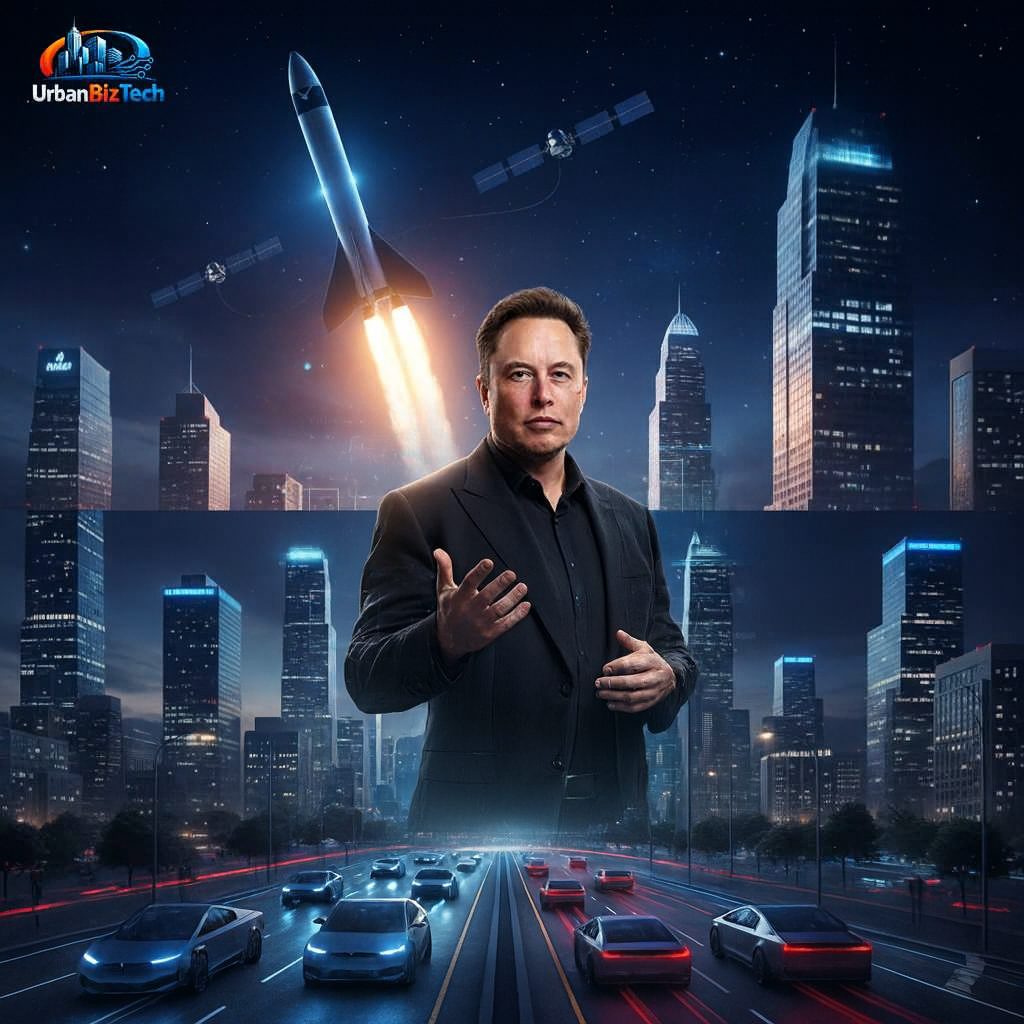
Few entrepreneurs in modern history have influenced as many industries at once as Elon Musk. From electric vehicles and private space travel to artificial intelligence and satellite internet, Musk’s business empire stretches across sectors that define the future of the global economy.
As of early 2026, financial estimates place Musk among the richest individuals on Earth, with the majority of his wealth linked to the market value of Tesla and SpaceX.
But the question investors, analysts, and media outlets continue to debate is simple:
Could Elon Musk become the first trillionaire?
Let’s break down where his money comes from, how his fortune grew, and what would need to happen for him to cross the $1 trillion mark.
Elon Musk’s Early Path to Wealth
Zip2 (1995–1999)
Musk co-founded Zip2, a digital city-guide software company, during the early days of the internet. In 1999, Compaq acquired the business for roughly $300 million, giving Musk tens of millions in proceeds and his first major capital base.
PayPal (1999–2002)
He then launched X.com, which later became PayPal after a merger. When eBay bought PayPal in 2002, Musk received a payout that turned him into a centi-millionaire and funded his next, far riskier ambitions.
Rather than diversifying into safe investments, Musk concentrated his capital into ventures many considered nearly impossible.
The Companies Powering Musk’s Net Worth
Tesla
Musk joined Tesla in 2004 and eventually became CEO. Under his leadership, the company helped push electric vehicles into the mainstream and became one of the most valuable automakers in the world.
Importantly, most of Musk’s wealth is not cash.
It is primarily Tesla stock, meaning his net worth can rise or fall dramatically with market movements.
SpaceX
Founded in 2002, SpaceX reduced launch costs and pioneered reusable rockets. Private market valuations in recent years have placed the company among the most valuable startups globally.
Its satellite internet division, Starlink, is often viewed as a potential future public company, something that could significantly affect Musk’s wealth on paper.
xAI, Neuralink & Other Ventures
Musk’s expansion into AI infrastructure, brain-computer interfaces, and robotics adds optionality. Investors frequently price in future expectations, not just current revenue.
How Close Is Musk to $1 Trillion?
Reaching a trillion-dollar personal fortune would likely require multiple factors happening at once, such as:
- Major increases in Tesla’s market value
- Higher private or public valuations for SpaceX/Starlink
- Strong investor confidence in AI and robotics initiatives
- Favorable legal and compensation outcomes tied to stock awards
Because his wealth is equity-based, large market swings could add or remove tens of billions within short periods.
Why Some Analysts Believe It’s Possible
Supporters of the trillionaire thesis often point to:
✔ dominance in future-oriented industries
✔ global scale of satellite communications
✔ AI and autonomy potential
✔ history of companies growing far beyond early expectations
If these trends accelerate, Musk’s ownership stakes could theoretically compound to unprecedented levels.
Why Others Urge Caution
Skeptics highlight real risks:
- stock market volatility
- regulatory pressure
- rising global competition
- execution challenges in autonomous driving and space expansion
In other words, the path to a trillion is far from guaranteed.
What Would a Trillion-Dollar Fortune Represent?
At that level, the figure would exceed the GDP of many countries and mark a symbolic moment in economic history, illustrating how technology platforms can concentrate value at extraordinary scale.
Yet again, such wealth would mostly exist in shares, not bank accounts.
Final Thoughts
Elon Musk’s rise from startup founder to one of the wealthiest figures alive is already historic. Whether he becomes the first trillionaire will depend less on headlines and more on how global markets value Tesla, SpaceX, and the technologies still under development.
For now, the trillion-dollar milestone remains a fascinating possibility rather than a certainty.
What do you think?
Will Elon Musk ever cross the $1 trillion line?
Pingback: The Billionaire Mindset: How the Ultra-Wealthy Think, Decide, and Build Lasting Success - UrbanBizTech
Pingback: How Jeff Bezos Became a Billionaire and Built a Trillion-Dollar Company - أوربان بيز تيك
Pingback: Sam Altman Unplugged: Musk’s Feud, The Trump Alliance, and the New Era of Robotics - Urban Business Technology
Pingback: 7 Ways Taylor Swift Built a Billion-Dollar Fortune and Redefined the Business of Music
Pingback: How Bernard Arnault Built LVMH: The Strategy Behind the World’s Most Powerful Luxury Empire
Pingback: Why Global Giants Are Racing to Dominate Artificial Intelligence in 2026
Pingback: How Larry Ellison Became a Billionaire: Net Worth, Oracle Ownership & Success Story
Pingback: How xAI Became a Global AI Powerhouse: Grok, Elon Musk and the Race for AI Dominance
Pingback: How Tesla Became the World’s Most Valuable Car Company